More Than Gotthard: Uri Seeks Its New Residential Identity
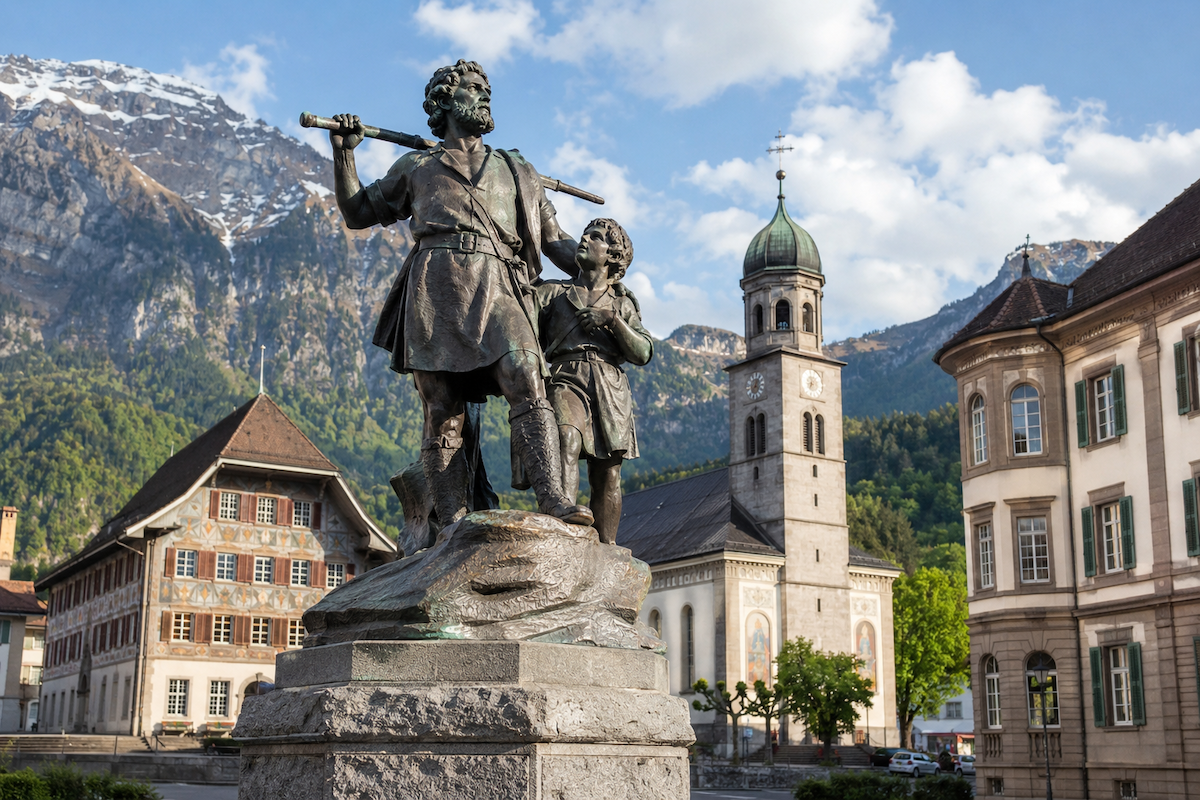
The Canton of Uri is currently undergoing one of the most fascinating and radical transformations on the entire Central Swiss real estate market. Historically anchored in the collective memory primarily as a rough transit corridor, home of the legendary Wilhelm Tell and a bottleneck of the Gotthard axis, the mountainous canton completely reinvents itself in 2026 as a highly attractive residential and living space. This realignment is driven by extreme asymmetry. While the flat valley floor of the Reuss Valley benefits from dynamic agglomeration, the alpine high valley of Andermatt operates as a global luxury ecosystem completely decoupled from the local economy. Anyone who wants to buy or strategically invest a property in Uri today will encounter a highly fragmented environment characterized by acute scarcity and extreme topographic contrasts. This guide analyses the economic and spatial planning drivers of this boom in depth and provides discerning buyers with sound guidance for choosing a strategic location.
The contrast between central Switzerland: Between transit culture and acute housing shortages
The macroeconomic environment for real estate and real estate loans in the canton of Uri is following tough, supply-driven patterns in 2026. The canton is suffering from a pronounced shortage of freely available housing across the board. The official statistical surveys document a cantonal vacancy rate of an icy 0.64% for Uri. The region thus fits seamlessly into the ranks of extremely tight domestic markets such as Glarus (0.61%) or Nidwalden (0.68%) and remains drastically below the economic balance barrier of 1.5%. Since steep mountain flanks and strict spatial planning requirements make it impossible to expand new building land over an area, continuously increasing demand meets an almost completely dried out supply.
This chronic shortage is inexorably driving the price level forward. The aggregated transaction data for the current year 2026 show an average price per square meter for residential property in the canton of Uri of around 7,219 francs. A closer look at the segments reveals the deep division of the market: While condominiums are rated at around 8,382 francs per square meter on average across the cantons, single-family homes are valued at a median of around 6,977 francs. According to the latest UBS Swiss Real Estate Bubble Index, the risk of a speculative real estate bubble for primary home markets in the valley floor is considered moderate, but the Urseren Valley shows clear signs of structural decoupling. Anyone who wants to make a successful acquisition here must have significant liquidity buffers, as credit institutions apply extremely strict audit standards when granting mortgages.
The division of the Uri real estate market: A portrait of the sub-markets
Due to its distinctive topography, the Canton of Uri is divided into three distinct residential and commercial areas, which have diametrically opposite barriers to entry and potential for appreciation:
- The Urner Reuss Valley and Altdorf (The Lively Valley Center): The agglomeration around the capital Altdorf and the municipalities of Schattdorf, Seedorf and Flüelen form the family and administrative powerhouse of the canton. Thanks to the massive expansion of the railway infrastructure and the cantonal railway station in Altdorf, Lucerne's economic center can be reached in less than 30 minutes in 2026, and Zug and Zurich are also perfectly connected. This makes the Reuss Valley the primary address for urban commuters who appreciate the stately panorama of Lake Uri but want to benefit from more moderate prices compared to the overheated neighboring cantons of Zug or Schwyz. A single-family house in Altdorf is estimated at around 5,546 to 5,690 francs per square meter on average.
- Andermatt and the Urseren Valley (The global premium resort): Located at 1,444 meters above sea level, Andermatt is the canton's undisputed trophy segment. Driven by continuous investments of billions as part of the “Sawiris effect,” the former garrison village has transformed itself into a year-round destination for the global elite. The local market operates in complete isolation: For modern condominiums in exclusive apartment buildings or stately chalets, prices of 11,291 to 14,937 francs per square meter will easily be called up in 2026. The all-important catalyst is the nationwide exemption of the destination from the strict requirements of Lex Koller, which allows international buyers to purchase residential property here without any restrictions on residence or quota restrictions.
- The Gotthard southern axis and mountain communities (The traditional idyll): Municipalities such as Amsteg, Wassen, Göschenen or the Alpine Realp offer a living environment of maximum deceleration and untouched nature. In 2026, pragmatists and dropouts will still find detached properties here at conditions far below the cantonal median. However, the segment requires uncompromising substance testing, as many historic buildings have significant structural deficiencies and a massive backlog of energy modernization.
Fiscal parameters and the regulatory second-home dilemma
An important parameter for the attractiveness of the Canton of Uri as a place of residence is its highly competitive tax system. Uri was one of the first cantons in Switzerland to introduce the so-called Flat Rate Tax — a proportional tax rate that guarantees noticeable tax relief, particularly for middle and higher incomes. Although municipal tax rates vary slightly between cantons, they are at an extremely moderate level across the board. This low fiscal burden significantly optimizes the private affordability calculation, as the recurring tax savings effectively cushion the interest and amortization costs of the property in the long-term financing plan.
However, these material advantages are offset by the restrictive regulatory corset of federal legislation. The Swiss Second Homes Act (Lex Weber) is blocking the construction of classic holiday homes without primary residence requirement in almost all Uri mountain communities, as the critical 20 percent rate has been exceeded nationwide. The only historical exception is the core area of Andermatt Swiss Alps. Any existing property located outside this special zone, which has a secure, old-law usage profile as a second home, is thus artificially monopolized and continuously increased in value. In addition, banks are relentlessly focusing on the energetic condition of buildings via the GEAK report (cantonal building energy certificate), as the canton of Uri is legally pressing ahead with the replacement of fossil heating systems with renewable energy in the Alpine region.
Checklist: Requirements for a successful location selection in the canton of Uri
- 1. Mandatory clarification of the primary residence requirement: Verify the exact legal status of properties outside the Andermatt-Special Zone in the land register extract (former secondary home vs. primary residence) in order to consistently rule out official usage bans.
- 2. Mathematical integration of the flat rate tax advantage: Calculate your individual income tax savings in the canton of Uri compared to your current place of residence and use this liquidity as a strategic lever for your financing structure.
- 3. Independent validation of the intrabank loan value: Since prices in Urserental in particular are driven by international speculation, you should have the eligible loan value checked in advance to avoid unforeseen gaps in equity coverage.
- 4. Comprehensive analysis of the building energy certificate (GEAK): Thoroughly analyze the energy efficiency class of older properties in the Reuss Valley in order to precisely calculate future investment costs for heating replacement or façade insulation.
- 5. Data-based market screening via heyloft.ch: In such a highly fragmented market, do not blindly trust the subjective price demands of brokers. Use heyloft.ch's technology-based estimation tools to objectively reflect the required price per square meter using real transaction data from Uri.
Conclusion: The evolution of a historic habitat
In the current market phase of 2026, an investment in residential property in the canton of Uri offers one of the most exciting and stable options within Central Switzerland. The canton has succeeded in the ambitious feat of merging the cosmopolitan transport openness of the North-South axis with the pristine authenticity and high quality of life of an alpine mountain canton. Anyone who approaches the selection process with analytical rigour, strategically exploits the deep division between the perfectly developed Reuss Valley and the exclusive luxury market in Andermatt, and precisely takes into account the regulatory framework, secures a crisis-resistant asset of lasting substance. Uri has finally emancipated itself from its role as a pure transit country and offers a solid, future-proof foundation for value-stable residential architecture.
Questions from this guide

Get answers to your questions
No matter what questions you have about real estate — Loft is here to answer them clearly, simply, and reliably.
Ask questions about a property