Glarus: Moving Closer to Zurich, Still a Mountain Canton
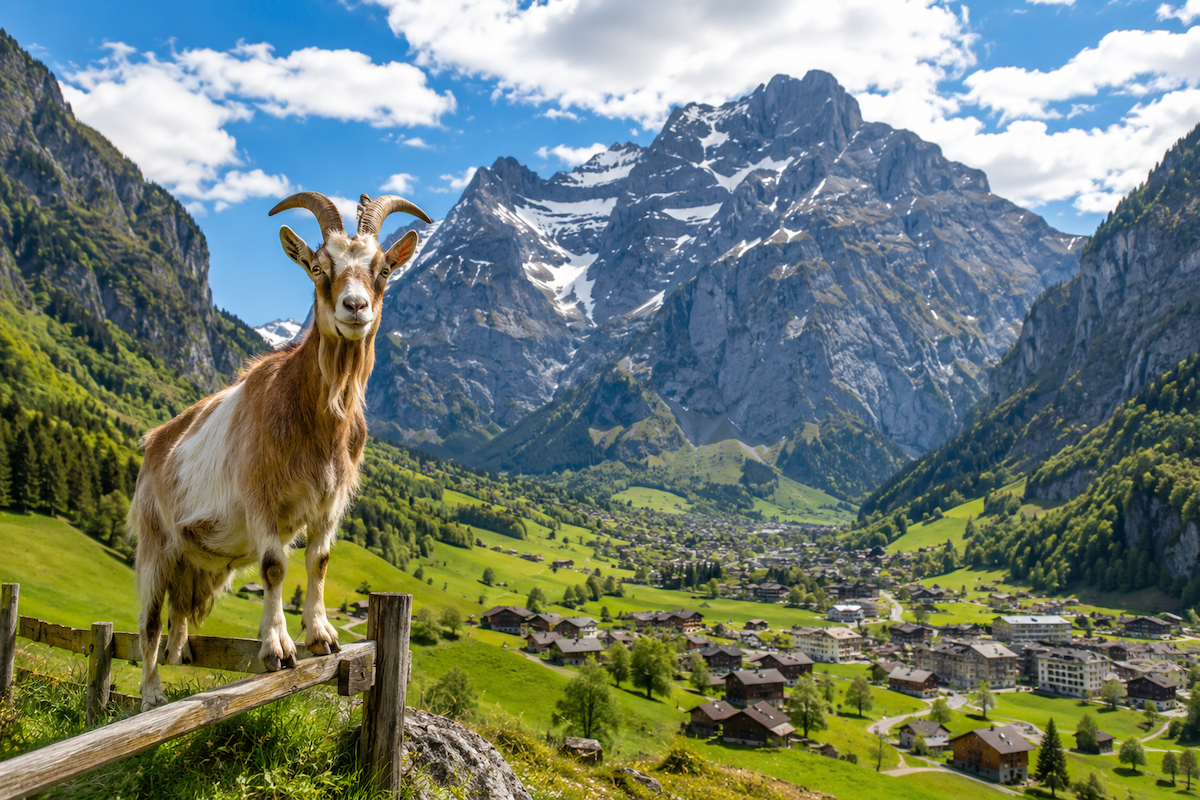
The canton of Glarus is currently undergoing remarkable economic and demographic repositioning within the fabric of German-speaking Switzerland. Historically characterized as a deep-rooted, highly industrialized textile and factory valley and topographically isolated by the steep rock faces of the Glärnisch massif, the region was considered an idiosyncratic special case away from major urban growth axes. But the progressive scarcity of affordable housing in the greater Zurich area has set in motion a fundamental dynamic. Glarus is moving ever closer, both infrastructurally and mentally, to the country's economic epicenter without giving up its unmistakable identity as an alpine mountain canton. Anyone who wants to buy or strategically invest a property here today is entering a market characterized by rapid market absorption, a historically unique merger of municipalities and distinctive topographical contrasts. This guide analyses the Glarner real estate market in its entirety and provides well-founded guidance for discerning buyers and urban commuters.
The expansion of Zurich's bacon belt: Glarus living space under acute demand pressure
The macroeconomic environment for real estate and real estate loans in the canton of Glarus has been following a highly expansive dynamic since the latest interest rate cycle. The decisive catalyst for this development is excellent transport connections: With the introduction of direct connections such as the S25 (the former Glarner-Sprinter), Zurich's Bahnhofstrasse can be reached in less than an hour. This groundbreaking shrinking of commuter distance has led to a massive increase in search subscriptions by prospective buyers from outside the canton. In 2026, Glarus is increasingly acting as a highly efficient housing valve for overheated markets along Lake Zurich.
The relentless consequence of this development is a nationwide, chronic supply shortage. The aggregated market data from the Glarner Kantonalbank (GLKB) document a cantonal vacancy rate of just 0.6% for 2026 — this figure is falling to historic lows in the front section of the valley. A look at the price development shows the canton's massive backlog demand: While the average price per square meter for residential property in the Glarus region is around 5,978 francs, single-family homes in locations close to the city center recorded a noticeable price jump of over 13% within the last twelve-month cycle. Anyone wishing to purchase a property in this phase will encounter a highly competitive market environment in which prompt, bank-compliant confirmation of existing equity is the fundamental prerequisite for transaction success.
The three dimensions of the Glarus region: An analysis of major municipalities
Since the historic structural reform of Glarus, which consolidated the former 25 independent villages into just three functional large municipalities, the local real estate market has been divided into three geographically and economically distinct sectors:
- Glarus Nord (Zurich's immediate catchment area): Municipalities such as Näfels, Mollis, Niederurnen and Bilten form the epicenter of the current real estate boom. The proximity to Lake Walensee and the direct motorway connection to the A3 make this region the preferred address for commuters. At an astronomical 0.1%, the vacancy rate in Glarus Nord has de facto reached the state of complete drying out of the rental and ownership market. Real estate prices reflect this extreme demand: Condominiums average around 7,215 francs per square meter, while single-family homes claim the median mark of 6,038 francs per square meter.
- Glarus (The administrative and cultural heart): The central community, comprising the main town of Glarus as well as Netstal, Riedern and Ennenda, combines urban infrastructure with historic charm. The urban image, characterized by the checkerboard-like reconstruction following the devastating fire of 1861, offers a high quality of life with short distances to educational and health facilities. The price per square meter for condominium ownership here stabilized at an average of 6,629 francs in 2026, while free-standing houses are valued at a median of 5,417 francs. Market absorption is high here, supported by a stable, local middle class.
- Glarus Süd (The authentic and extensive Alpine Gate): One of the largest municipalities in Switzerland in terms of area, Glarus Süd stretches across Schwanden and Elm up to Linthal. Here, the canton reveals itself in its harshest, most authentic form as an alpine mountain canton. The region primarily attracts peace seekers, nature enthusiasts and buyers of holiday homes. Compared to the cantons, Glarus Süd offers the most favourable price level: The median price of a single-family house here is around 4,049 francs per square meter, while apartments are listed at 5,975 francs. However, the segment requires precise substance testing, as many historic buildings pose significant energy-related modernization risks.
Fiscal parameters and energy challenges in the alpine region
The financial load of a property in Glarus is largely determined by the specific fiscal and topographical conditions of the canton. In federal Swiss tax competition, Glarus is in a solid midfield. Although the average taxable income of the population is statistically around 18% below the Swiss average, the combination of moderate tax rates and even lower entry prices for real estate compared to other cantons significantly optimizes the private affordability calculation. By exploiting the price arbitrage, owners generate significant cost advantages over the neighboring cantons of Schwyz or St. Gallen.
However, a fundamental challenge in 2026 is the Cantonal Energy Act, which is being implemented with particular consistency in the Glarus region due to the alpine climate and shady valley floors. When renovating old buildings, strict legal requirements apply to the reduction of fossil fuels. Evidence of a detailed GEAK report (cantonal building energy certificate) is almost always essential when altering older properties. Although the canton supports the replacement of oil and gas heating systems with modern heat pumps or wood-based systems with substantial funding, the initial investment costs must be fully budgeted in the private financing plan. In addition, alpine towns such as Elm or Braunwald are subject to strict restrictions under second home legislation (Lex Weber), which artificially shortens and increases the cost of buying classic holiday apartments without a primary residence requirement.
Checklist: Requirements for a legally secure acquisition in the Glarus region
In order to consistently rule out financial mistakes and legal pitfalls when acquiring a property at the intersection between a metropolitan catchment area and a high-alpine area, buyers must complete the following strategic review steps:
- 1. Analysis of effective commuter time: Measure your daily mobility matrix precisely. Check the frequency of the S25 from your preferred municipality and calculate potential weather-related delays in the upper section of the valley in winter.
- 2. Comprehensive verification of usage status: For properties in Glarus Süd (in particular Elm and Braunwald), check exactly in the land register extract whether there is a legally valid declaration as a second home in order to avoid criminal penalties for purely holiday use.
- 3. Evaluation of the building energy certificate (GEAK): Thoroughly analyze the energy efficiency class of the property in order to precisely incorporate deferred renovation obligations relating to the building envelope and the heating system into the basis for negotiation.
- 4. Validation of the eligible loan value: Since prices in Glarus Nord are heavily driven by demand pressure from Zurich, some banks use conservative estimates. Secure your financing with sufficiently liquid equity to be able to cover a difference in estimates.
- 5. Independent market analysis via heyloft.ch: Don't blindly trust the emotional price demands on the market. Use heyloft.ch's technology-based estimation tools to objectively reflect the required price per square meter using real Glarner transaction data and to structure your dossier perfectly.
Conclusion: The evolution of Glarus into a modern alpine dream
In the current market phase of 2026, an investment in residential property in the canton of Glarus offers one of the most economically rational and scenically fascinating options within German-speaking Switzerland. The canton has succeeded in the sophisticated feat of merging urban connectivity to Zurich's economic center with the pristine authenticity and high quality of life of a genuine mountain canton. Anyone who approaches the selection process with analytical rigour, makes strategic use of the considerable price and vacancy disparities between Glarus North and Glarus Süd and accurately calculates the energy requirements in advance, secures a stable asset of lasting substance. Glarus has finally emancipated itself from being a pure industrial door and offers the ideal foundation for crisis-resistant, future-proof residential architecture.
Questions from this guide

Get answers to your questions
No matter what questions you have about real estate — Loft is here to answer them clearly, simply, and reliably.
Ask questions about a property