Between Lake Lucerne and Pilatus: Living and Quality of Life in the Canton of Lucerne
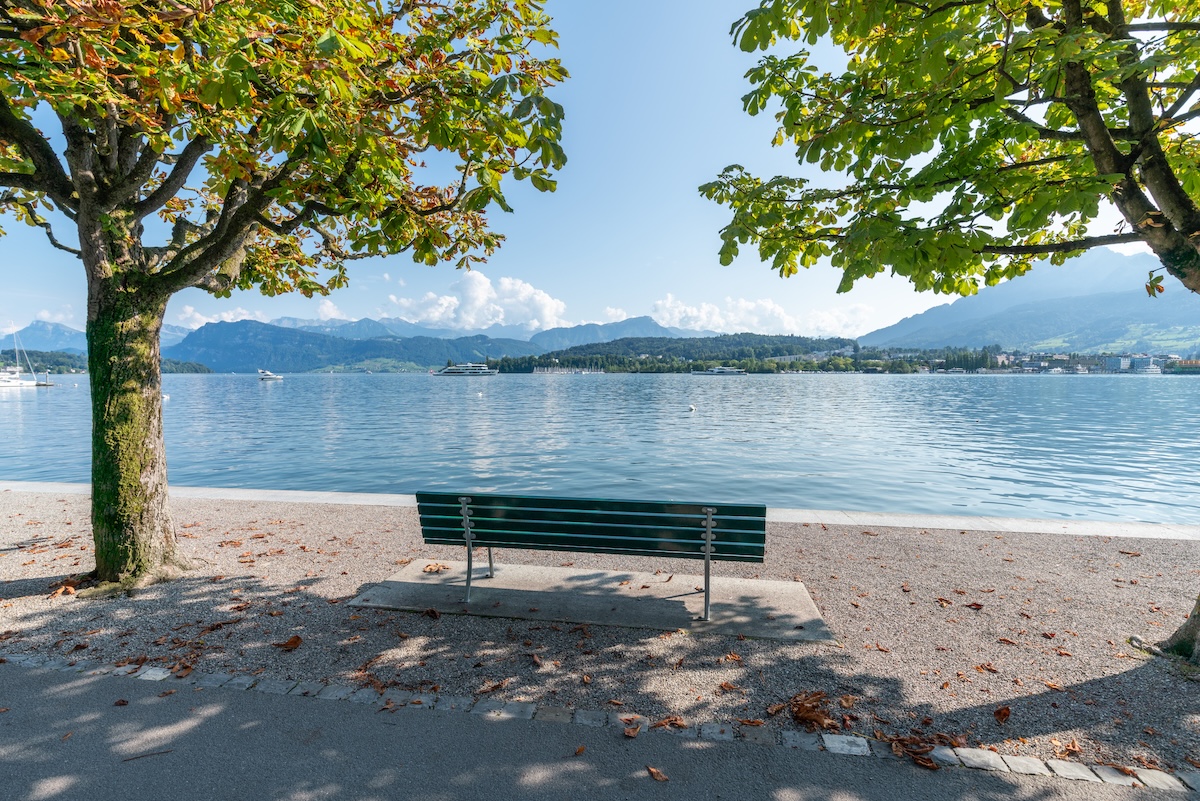
The Canton of Lucerne is considered the undisputed heart of Central Switzerland and combines economic dynamism with world-famous natural scenery like hardly any other region. But the high attractiveness between the lake plain and alpine peaks has maneuvered the local real estate market into a demanding phase. Anyone who wants to buy or rent living space here is faced with a market environment characterized by pronounced supply shortages, considerable regional differences and dynamic price developments. This guide analyses the heterogeneous structure of Lucerne's sub-markets and provides discerning buyers, commuters and investors with sound guidance for choosing a successful location in the Canton of Lucerne over the long term.
The housing market in Central Switzerland: agglomeration pressure and supply scarcity
The real estate market in the Canton of Lucerne has been following a relentless dynamic for several years: Demand for housing is increasingly decoupling from real supply. The LUSTAT statistical surveys document a cantonal vacancy rate of just 0.78% for 2026 — meaning that the vacancy barrier remains low below the critical 1 percent mark for the fourth year in a row. Compared to regions, this chronic shortage particularly affects larger family apartments of four rooms or more, while there is a marginally higher fluctuation rate in the micro-apartments segment. The immense pressure on the housing market is primarily the result of the continued influx of qualified specialists and the continued attractiveness of the location for national and international companies.
The resulting consequences are clearly reflected in the transaction data. The average price per square meter for residential property in the Canton of Lucerne settled at a median of around 9,338 francs in 2026. However, there is a fundamental gap between property types: While condominiums are quoted at 9,487 francs per square meter on average in cantons, single-family homes are around 9,189 francs. Anyone looking in the coveted core areas of the agglomeration is confronted with a highly competitive selection process, in which financial solvency and an extremely short response time decide on the contract.
Portraits of regions: Geographical and economic diversity
The Canton of Lucerne is divided into highly differentiated sub-markets, whose socio-cultural signature and pricing are decisive for the real quality of life and the financial obligations of residents:
- The City of Lucerne (Urban Density and Culture): The economic and tourist epicenter of the canton. Living in the city of lights offers a perfect symbiosis of historic architecture, urban infrastructure and immediate proximity to the lake. The exclusive pavement is reflected in prices: condominiums in urban areas break the mark of 14,553 francs per square meter on average. Due to the extreme scarcity, urban housing policy in 2026 is increasingly focusing on non-profit housing in order to secure affordable housing for families in the long term.
- The lakeside communities (the luxury segment): Municipalities such as Meggen, Weggis or Vitznau represent the absolute premium class of the Central Swiss real estate market. Favoured by a privileged south-facing slope with an unobstructed view of Lake Lucerne and Mount Pilatus, prices per square meter for luxurious attic apartments and prestigious villas here reach peaks of well over 20,000 francs. These microlocations act as magnets for high-income private individuals and are characterized by an extremely restrictive supply of properties.
- Growth pole Sursee/ Sempachersee: The region around Lake Sempach has become the most dynamic development center in the canton away from the core area. Thanks to excellent transport connections via the A2 motorway to Basel, Bern and Zurich, Sursee has established itself as a highly attractive place to live. The region sometimes has the lowest vacancy rates in the canton, but compared to the city of Lucerne, it often offers even more favourable value for money for young professionals and families.
- The hinterland and Entlebuch (rural retreat): Anyone looking for peace, untouched natural landscapes and spacious plots of land will find a stable environment in the Lucerne hinterland or the UNESCO Entlebuch Biosphere. Municipalities such as Willisau or Schüpfheim offer single-family homes at conditions that are well below the cantonal median. The downside of this rural idyll is the longer commuter routes and the higher fiscal burdens due to structural reasons.
Fiscal framework: Focus on tax competition and real estate prices
A key parameter for evaluating the place of residence in the Canton of Lucerne is the pronounced cantonal tax gap. In 2026, municipal tax rates range from 0.90 to 2.40 units, with the cantonal median of 1.90 units. Since the turn of the millennium, the municipality of Meggen has remained the absolute tax haven, which has a top national position with a tax rate of just 0.90 units. In contrast, there are structurally weaker communities in the hinterland, such as Luthern, which mark the upper end of the spectrum.
The interdependence between tax attractiveness and the development of real estate prices has recently been the subject of intensive debate. However, a broad-based scientific study by the Lucerne University of Applied Sciences and Arts (HSLU) and Wüest Partner from spring 2026 refuted the popular thesis of a direct, unstoppable “drugging” of the city of Lucerne through tax cuts. The experts proved that although the recent reduction in the urban tax rate of 0.10 units triggered one-off adjustment effects in rents, the primary price driver is the fundamental deficit on the supply side. Buyers must therefore precisely offset the individual fiscal burden with the entry prices of the respective municipality in order to accurately determine long-term residential costs.
The path to owning a home: The checklist for a successful location in Lucerne
In order to rule out financial mistakes when acquiring a property in the canton of Lucerne and to find the optimal balance between costs and quality of life, buyers must take a strategic approach.
- 1. Analysis of the municipal tax rate: Compare the tax burden of your preferred municipality with the cantonal median (1.90 units). A lower tax burden in municipalities such as Meggen or Horw often offsets the higher mortgage costs of more expensive properties.
- 2. Commuter infrastructure audit: Evaluate the connection to the Lucerne S-Bahn network and the accessibility of the A2 motorway entrances, especially if your workplace is located in the neighboring economic centers of Zug or Zurich.
- 3. Consideration of restrictions on second homes: For properties in tourist regions around the lake or in the direction of Entlebuch, comply with the strict requirements of second home legislation, which can massively influence subsequent use and resale.
- 4. Energy status and building check: Check the GEAK report (cantonal building energy certificate) before you buy. The Canton of Lucerne links energy renovations to attractive subsidies, but in the long term requires a consistent abandonment of fossil fuels.
- 5. Property valuation via heyloft.ch: Use the data-driven and platform-based estimation tools on heyloft.ch to check the required selling price for market compliance with real Central Switzerland transaction data and to optimally prepare your financing dossier.
Conclusion: A sustainable investment in quality of life and value stability
Despite restrictive supply and demanding pricing structures, the Canton of Lucerne remains one of Switzerland's most crisis-resistant and attractive residential regions. The unique balance between urban cultural flair, the immediate recreation area on Lake Lucerne and excellent economic networking guarantees owners the long-term value of their real value investments. Anyone who approaches the selection process with analytical rigour, takes into account the tax divergences between municipalities and tailors the regional infrastructure precisely to their own living needs will find the perfect foundation for private and economic stability in the Canton of Lucerne.
Questions from this guide

Get answers to your questions
No matter what questions you have about real estate — Loft is here to answer them clearly, simply, and reliably.
Ask questions about a property