Dolce Vita in the South: Lugano, Locarno and Mendrisio
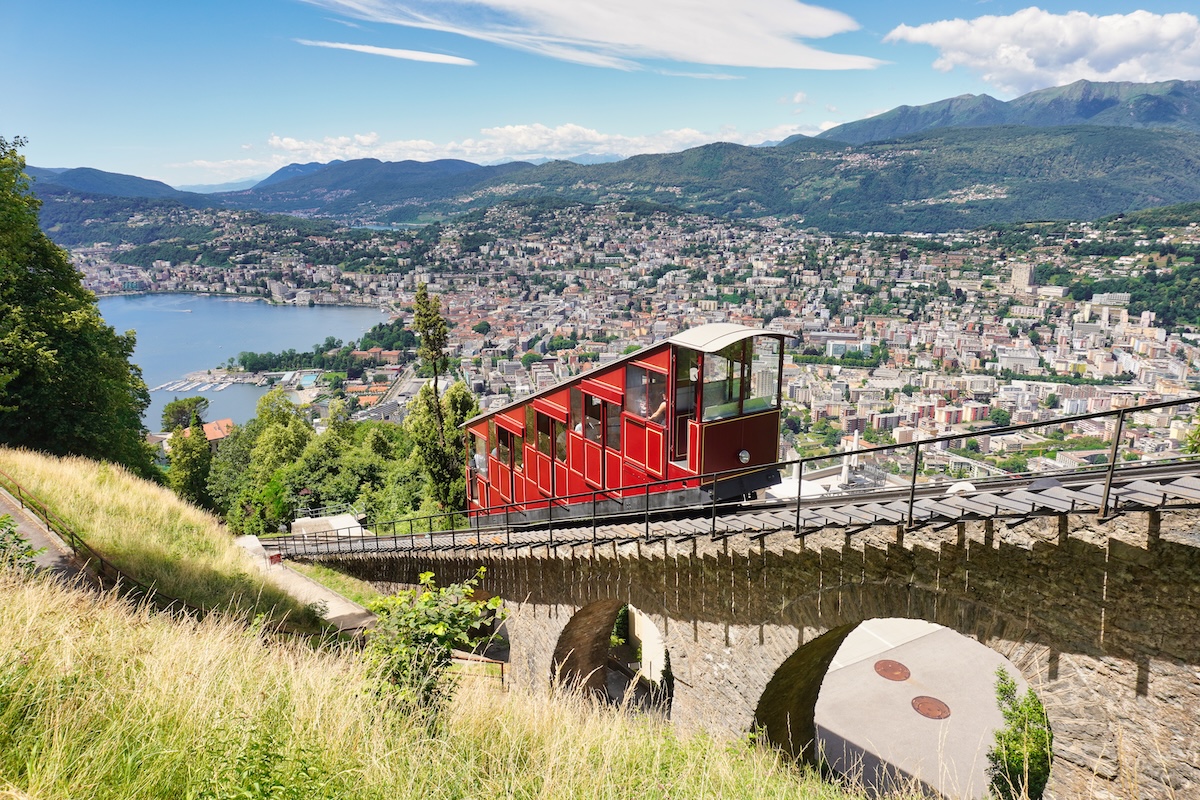
Switzerland's southern side of the Alps has always been regarded as the ultimate destination for a demanding clientele who wants to combine Mediterranean flair with the proverbial Helvetic security and political stability. But in 2026, the real estate market in the canton of Ticino presents itself as a highly complex, highly fragmented terrain that eludes superficial consideration. Anyone who wants to buy housing here or invest in tangible assets is caught between a heavily regulated holiday home market, considerable fiscal disparities and demographic shifts within the Swiss Confederation. This guide analyses the heterogeneous structures of the three distinctive residential regions — Lugano, Locarno and Mendrisio — in their entire economic depth and offers well-founded, strategic guidance for a successful long-term choice of location in the southern canton.
The Ticino real estate market: Between holiday idyll and structural change
The market environment for real estate in Ticino follows a completely unique cyclical dynamic, which is fundamentally different from the patterns of German-Swiss economic centers. The local market is primarily determined by two contrasting demand flows: On the one hand, there is a highly competitive luxury and vacation segment, which is massively fed by capital inflows from northern and western Switzerland as well as from international expats. On the other hand, there is a local market for first-time residents, which is directly linked to the purchasing power of the local population and the development of the regional service and industrial sector. This dichotomy results in a pronounced spread in prices per square meter, which is further aggravated by restrictive national legislation.
The statistical indicators show that the supply of first-class living space in the coveted lake basins has reached historic lows. The tightening of spatial planning laws and the lack of strategic building zones have brought construction activity in the fillet layers to an almost complete standstill. Anyone who wants to buy a property in the south in 2026 should not be guided by a romantic holiday atmosphere. The transaction process requires a sober analysis of the respective sub-market. While certain peripheral locations in the interior of the country are struggling with structural vacancy, the urban centers and exclusive hillsides continue to maintain price stability at an extremely high level. The final purchase price is therefore dictated more than ever by the microclimatic and tax location of the specific municipality.
Portrait of the sub-markets: Comparing identity, price dynamics and quality of life
The southern canton is divided into three economically and socio-culturally diverging economic and residential areas, each with a completely unique risk and return profile:
- Lugano (The cosmopolitan financial and cultural center): As the largest metropolis in the canton, Lugano represents the perfect symbiosis of urban density, high-quality service infrastructure and scenic elegance. Living in the urban center or in the exclusive hillside areas of Castagnola, Ruvigliana and Paradiso offers an incomparable quality of life. This exclusivity is bluntly reflected in the transaction data: The prices per square meter for luxurious condominiums with lake views are in a corridor that easily reaches the level of Zurich's Gold Coast. Lugano primarily attracts entrepreneurs, financial economists and demanding cosmopolitans who appreciate first-class medical care, international private schools and immediate access to the economic hub of Milan.
- Locarno and Ascona (The tourist epicenter in the Lago Maggiore basin): Like no other, this region represents the classic image of Ticino's holiday idyll. The microclimate characterized by palm trees and the world-famous cultural offerings (such as the Locarno Film Festival) make the lake basin a primary magnet for retirees and holiday home buyers from German-speaking Switzerland. Real estate in Ascona or on the sunny slopes of Orselina and Brione sopra Minusio is considered absolute premium investments. The market segment here is almost completely regulated by the Second Homes Act. Since the quota of legal holiday homes in almost all lakeside communities has long since exceeded the critical 20 percent mark, the purchase of such a property entails considerable surcharges. The price-performance ratio here is heavily emotionally overlaid, which forces buyers to carry out a particularly meticulous substance review.
- Mendrisio and Mendrisiotto (The flourishing economic engine in the south): The Mendrisiotto is the pragmatic, economic antithesis to the tourist-dominated lake basins. As a strategic link on the North-South axis and close to the border with Lombardy, the region has developed into a dynamic center for industry, logistics and tech companies. Living space in Mendrisio or Chiasso offers an exceptionally favourable price level and a high real return for investors compared to other cantons. The region has an excellent transport infrastructure and is the preferred address for cross-border commuters and families looking for affordable residential property combined with an intact rural environment and modern educational institutions (such as the Accademia di Architettura).
Tax and regulatory frameworks: The fiscal pitfalls in the south
A decisive factor when evaluating a property in Ticino is the pronounced cantonal and municipal tax differentials. The cantonal tax rate is adjusted individually in municipalities using the so-called tax foot multiplier (moltiplicatore d'imposta). While wealthy maritime communities such as Collina d'Oro or Vezia operate with extremely low multipliers of less than 60% and thus function as absolute tax havens, structurally weaker municipalities in the interior have values of well over 90%. This discrepancy has a direct impact on the long-term affordability of financing.
In addition, owners who remain their primary place of residence in German-Weiz must take into account the specific handling of imputed rental value taxation in Ticino. When determining the fictitious income for holiday properties, the canton often uses rigorous practice in an inter-cantonal comparison, which can significantly increase tax progression at the main place of residence. Another regulatory stumbling block concerns the renovation of traditional Ticino houses, the so-called Rustici. These objects, which are often located in special agricultural use zones, are subject to extremely strict spatial planning and cultural heritage protection requirements. A structural change or energy modernization requires lengthy approval procedures and quickly exceeds any calculated budget without a precise financing plan.
Checklist: Requirements for legally secure real estate purchase in Ticino
In order to consistently rule out financial and legal missteps when acquiring a property on the south side of the Alps, buyers must complete the following strategic review steps:
- 1. Verifying official usage status: Check in the land register and with the municipality's building administration whether the property has a legal status as a second home. A primary residence used illegally as a holiday home leads to severe official sanctions and a massive loss of value.
- 2. Calculation of the municipal tax rate: Analyze the Moltiplicatore d'imposta of the target municipality. Higher entry prices in tax-friendly municipalities such as Meggen equivalents in Ticino often pay off over the years through significant savings in income and wealth tax.
- 3. Review of monument protection and zoning requirements: For properties in the historic core (Nucleo) or Rustici, obtain binding information in advance from the cantonal building commission in order to precisely determine the real extent and costs of future renovations.
- 4. Validation of the eligible loan value: Swiss banks often value Ticino real estate — particularly holiday properties — at conservative discounts. Make sure that your equity is sufficient to fully cover any difference between the required purchase price and the internal bank estimate.
- 5. Using digital market data via heyloft.ch: Don't rely on the often subjective pricing expectations of local agents. Use heyloft.ch's technology-based estimation tools to objectively reflect the price per square meter of the object based on real Ticino transaction data and strengthen your negotiating position.
Conclusion: Strategic foresight beats the emotional holiday feeling
An investment in residential property in the canton of Ticino undoubtedly offers one of the most fascinating combinations of exclusive quality of life, Mediterranean lifestyle and long-term capital preservation within Switzerland. But the market does not forgive emotional impulse purchases based on a holiday mood. Anyone who understands the fundamental division of the canton into three, precisely calculates the fiscal parameters of the municipal tax rate and accepts the strict regulatory requirements of second home legislation as an irrefutable guardrail, secures a stable asset. With the right analytical preparation and data-based market transparency, the Ticino real estate project is transformed from a pure luxury asset to a crisis-resistant foundation of your private asset architecture.
Questions from this guide

Get answers to your questions
No matter what questions you have about real estate — Loft is here to answer them clearly, simply, and reliably.
Ask questions about a property